
PedroVazPaulo Wealth Investment: Your Guide to Smart Money Management in 2026
PedroVazPaulo wealth investment offers a fresh approach to building financial security. Many investors struggle to find personalized strategies that actually match their goals. They get cookie-cutter advice that doesn’t fit their situation. Sound familiar?
Here’s the reality. Generic investment plans rarely work. You need something tailored to your risk tolerance and timeline. That’s where specialized wealth management makes a difference.
This guide shows you how to choose the right investment partner. You’ll learn practical strategies that protect and grow your money. We’ll cover everything from finding advisors nearby to booking consultations online.
No fluff. No jargon. Just actionable insights you can use today.
What Makes PedroVazPaulo Wealth Investment Different
Most wealth managers use the same tired playbook. They pitch identical portfolios to everyone. PedroVazPaulo takes a different path.
The firm starts with understanding your story. What keeps you up at night financially? Where do you want to be in ten years? These questions shape your entire strategy.
Three core principles guide every decision:
- Personalization beats generic solutions every time
- Long-term value trumps short-term gains
- Transparency builds trust and confidence
Founded in 2008, the firm combines old-school wisdom with modern technology. You get human expertise backed by data analytics. That’s powerful.
The philosophy is simple: wealth without wisdom crumbles. Education comes first. Then investment decisions follow naturally.
Many firms talk about personalized service. Few actually deliver it. PedroVazPaulo uses psychometric analysis to understand your risk profile. They dig deep into your financial psychology before recommending anything.
This matters because markets swing wildly. Your portfolio needs to match your emotional capacity for risk. Otherwise, you’ll panic-sell at the worst moments.
For entrepreneurs seeking broader guidance, exploring business consulting options can complement your investment strategy.
Finding Top Rated PedroVazPaulo Wealth Investment Services Near You
Location matters less than it used to. But sometimes you want face-to-face meetings. Here’s how to find quality wealth management locally.
Start with these practical steps:
Search for “pedrovazpaulo wealth investment within 5 mi” in your area. Check reviews and ratings carefully. Look for consistent patterns, not isolated complaints.
Distance creates convenience. Services within 20 miles offer easier access for quarterly reviews. You can drop by when market turbulence makes you nervous.
Top rated providers share common traits. They respond quickly to questions. Their fee structures are crystal clear. No hidden charges surprise you later.
Evaluating Local Investment Advisors
Check credentials first. Certified financial planners (CFP) meet strict education requirements. They follow ethical standards too.
Ask about their client base. Do they work with people like you? Someone managing billionaires might not understand middle-class concerns.
Request a sample portfolio review. See how they explain complex concepts. Good advisors translate jargon into plain English.
The best firms offer multiple communication channels. Phone, email, video calls, and in-person meetings. Flexibility matters.
Accessibility and Convenience Features
Modern wealth management includes digital tools. Check if they provide mobile app access. Can you view your portfolio anytime?
Look for firms offering 无障碍入口 (accessible entry points). This means easy onboarding for diverse clients. Language support matters if English isn’t your first language.
Some services are 营业中 (open now) with extended hours. This helps if you work standard business hours yourself.
Online booking (在线预约) should be straightforward. No phone tag. Just pick a time that works for you.
Core Services That Build Real Wealth
PedroVazPaulo wealth investment covers six essential areas. Each one protects a different aspect of your financial life.
Personalized investment advisory starts everything. Your advisor analyzes your complete situation. Income, expenses, debts, goals—all of it matters.
They create a custom roadmap. Not a template. A genuine strategy designed for you.
Wealth preservation protects what you’ve built. Inflation erodes purchasing power silently. The firm uses inflation-linked bonds to fight back. Commodities provide additional hedges.
Think of it as financial armor. Your wealth stays intact even when prices rise.
Tax optimization keeps more money in your pocket. Strategic planning reduces what you owe legally. Asset location matters—putting the right investments in the right accounts.
Tax-loss harvesting captures deductions. Charitable giving strategies benefit causes you care about while lowering taxes.
Retirement Planning Done Right
Most Americans feel anxious about retirement. Surveys show 64% worry their savings won’t last. Smart planning eliminates that fear.
Start by maximizing employer matches. That’s free money you’re leaving on the table otherwise. Use catch-up contributions after age 50.
Retirement accounts come in different flavors. Traditional IRAs offer upfront deductions. Roth IRAs provide tax-free growth. Choose based on your current versus future tax brackets.
Create multiple income streams. Social Security forms the foundation. Add pension benefits if available. Investment dividends supplement both.
For those building businesses alongside investments, operations consulting can streamline your company’s financial efficiency.
Estate and Succession Planning
Nobody enjoys thinking about death. But planning prevents family chaos later. Estate planning ensures your assets transfer smoothly.
Wills specify who gets what. Trusts can reduce taxes and avoid probate. Power of attorney documents protect you if incapacitated.
Life insurance provides liquidity. Your heirs can pay estate taxes without selling assets at bad times.
Smart Investment Strategies for 2026 and Beyond
Markets evolve constantly. Your strategy must adapt. Here are approaches that work now.
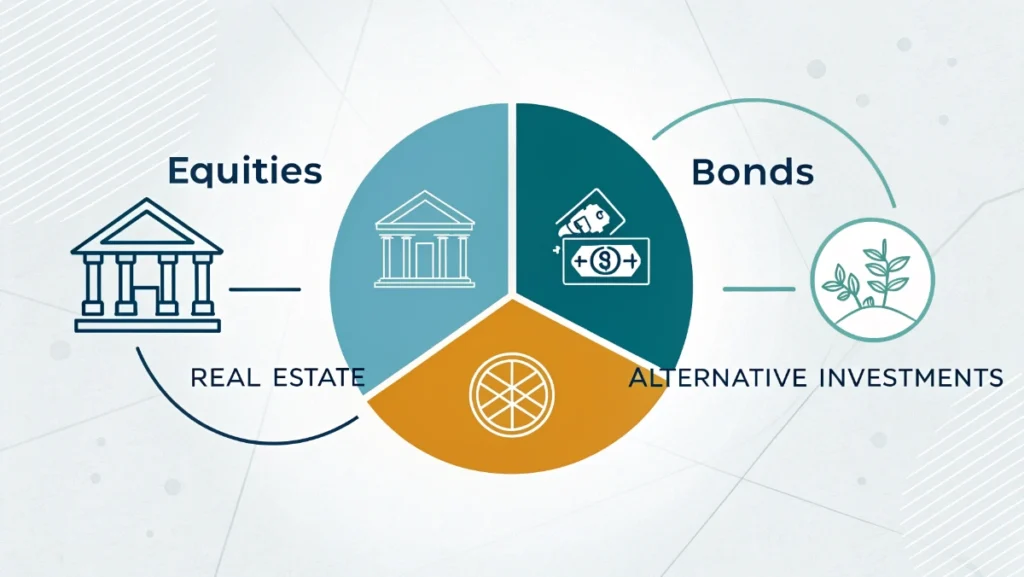
Diversification remains king. Spread money across stocks, bonds, real estate, and alternatives. When one drops, others often rise.
| Asset Class | Average Return | Risk Level | Best For |
|---|---|---|---|
| Equities | 8.5% annually | High (15% volatility) | Long-term growth |
| Bonds | 4.0% annually | Low (5% volatility) | Stability and income |
| Real Estate | 6.2% annually | Medium (10% volatility) | Inflation hedge |

Numbers tell the story. Stocks offer highest returns but biggest swings. Bonds provide stability. Real estate splits the difference.
Rebalancing keeps you on track. Review allocations every six months. If stocks surge to 70% when your target is 60%, sell some. Buy underweighted assets instead.
This forces you to sell high and buy low. Exactly what successful investors do.
Alternative Investments Gaining Ground
Traditional portfolios miss opportunities. Alternative assets are changing the game. Private equity investments access non-public companies early.
Venture capital backs startups before they explode. High risk meets high reward potential. Keep exposure around 5-10% initially.
Real estate investment trusts (REITs) provide property exposure without buying buildings. You get rental income plus appreciation potential.
Cryptocurrency adds blockchain technology to portfolios. Bitcoin and Ethereum dominate. But volatility runs extreme. Start small if you’re curious.
Alternative assets currently represent under 3% of wealthy portfolios. Experts predict that tripling to 12 trillion dollars over the next decade.
Those exploring digital currencies should review crypto investment strategies separately for specialized guidance.
How to Book Your Investment Consultation Online
Modern wealth management starts with easy access. Booking consultations shouldn’t require phone tag. Here’s the streamlined process.
Visit the firm’s website directly. Look for “在线预约” or “Book Appointment” buttons. They’re usually prominent on the homepage.

The booking process takes three simple steps:
- Select your preferred date and time
- Fill in basic contact information
- Describe your primary financial concerns briefly
Most firms respond within 24 hours. They’ll confirm your appointment or suggest alternatives if needed.
What to Prepare for Your First Meeting
Come prepared to maximize value. Gather recent financial statements. Bank accounts, investment accounts, retirement plans—bring everything.
List your debts with interest rates. Include mortgages, car loans, credit cards, and student loans. This shows your complete picture.
Write down specific goals. “Retire comfortably” is too vague. Try “Generate $80,000 annual income starting at age 65” instead.
Think about risk tolerance honestly. How did you react during the 2020 market crash? Your past behavior predicts future responses.
Questions to ask during consultation:
- What’s your investment philosophy?
- How do you charge for services?
- How often will we review my portfolio?
- What happens during market downturns?
- Can I access my accounts digitally?
Understanding Fee Structures
Financial advisors charge differently. Most use assets under management (AUM) fees. Expect 0.25% to 2% annually. Larger portfolios usually get lower percentages.
Some charge flat fees instead. You pay a set amount regardless of portfolio size. This works well for straightforward situations.
Hourly consultations suit one-time advice. Estate planning or tax strategies often use this model.
Avoid advisors who only earn commissions. They might push products that pay them more. Fee-only or fee-based models align interests better.
Always ask about hidden costs. Trading fees, fund expense ratios, and custody charges can add up sneakily.
Leaders seeking to develop their financial acumen alongside investing might benefit from executive coaching programs.
Risk Management That Actually Protects Your Money
Protection matters as much as growth. Losing 50% requires 100% gains to recover. Prevention beats cure.
Diversification provides the first defense. We’ve covered asset allocation. Now let’s go deeper into geographic and sector diversification.
Don’t put everything in US markets. International exposure captures global growth. Emerging markets offer higher potential but more volatility.
Sector diversification spreads risk across industries. Technology, healthcare, finance, energy, consumer goods—balance them all. When tech crashes, healthcare might thrive.
Emergency Funds and Insurance
Keep 6-12 months of expenses in liquid savings. This prevents forced selling during emergencies. High-yield savings accounts beat traditional ones.
Insurance fills gaps savings can’t. Life insurance protects your family if you die unexpectedly. Disability insurance replaces income if you can’t work.
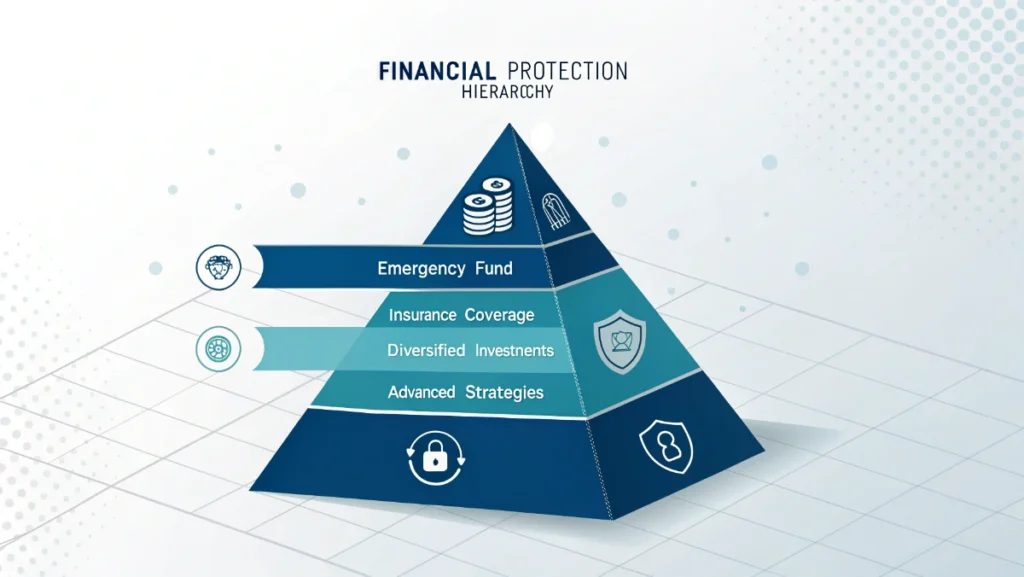
Long-term care insurance covers nursing home costs. These bills destroy retirement savings fast. Buy coverage in your 50s before health issues raise premiums.
Property and casualty insurance protects physical assets. Umbrella policies add extra liability coverage beyond standard limits.
Handling Market Volatility
Markets swing wildly sometimes. 2020 saw massive drops then quick recoveries. Panic selling locks in losses permanently.
Dynamic overlays adjust exposure automatically. When volatility spikes, systems reduce risk. When calm returns, they increase again.
Stay focused on long-term goals. Short-term noise doesn’t matter for 20-year plans. Review your strategy, not daily prices.
Dollar-cost averaging smooths out turbulence. Invest fixed amounts regularly regardless of price. You buy more shares when cheap, fewer when expensive.
For comprehensive business risk assessment, strategy consulting services can identify vulnerabilities across your enterprise.
Technology-Powered Investment Management
Artificial intelligence transforms wealth management. PedroVazPaulo wealth investment leverages cutting-edge tools while maintaining human oversight.

Predictive analytics spot trends early. Machine learning algorithms analyze vast data sets. They identify patterns humans miss.
Risk assessment happens in real-time now. Systems monitor portfolio exposure constantly. Alerts trigger when thresholds breach.
Performance tracking automates reporting. You see exactly how investments perform. No more waiting for quarterly statements.
Tax optimization software finds harvesting opportunities automatically. It captures losses to offset gains. This maximizes after-tax returns.
Robo-Advisors Versus Human Expertise
Pure robo-advisors cost less. Annual fees around 0.25% beat traditional advisors. They rebalance automatically and optimize taxes.
But algorithms can’t handle complexity. Selling a business, inheritance planning, divorce settlements—these need human judgment.
The best approach blends both. Technology handles routine tasks efficiently. Advisors focus on strategic decisions and personal guidance.
PedroVazPaulo offers this hybrid model. Automated systems manage daily operations. Experienced advisors provide wisdom and personalization.
Digital platforms provide 24/7 portfolio access. Mobile apps show real-time values. You can check investments anywhere, anytime.
Entrepreneurs balancing multiple ventures benefit from coaching programs that integrate financial and business growth strategies.
Common Investment Mistakes to Avoid
Learning from others’ errors saves time and money. Here are the biggest mistakes investors make repeatedly.
Panic selling destroys wealth. Markets drop occasionally. That’s normal. Selling during crashes locks in losses. Stay calm instead.
The 2008 financial crisis scared many investors. Those who held recovered fully by 2013. Those who sold missed the rebound.
Chasing hot investments rarely works. Last year’s winner often becomes this year’s loser. By the time you hear about it, the opportunity has passed.
Cryptocurrency mania illustrated this perfectly. Late buyers in 2021 lost heavily. Early adopters made fortunes.
Concentration Risks Kill Portfolios
Putting too much in one stock courts disaster. Company-specific risks can wipe you out. Enron employees learned this painfully.
Even great companies face troubles. Diversify across at least 20-30 different stocks. More is better for most investors.
Geographic concentration creates similar problems. Don’t invest only in your home country. Global diversification reduces correlation.
Sector clustering happens accidentally. You might own five tech stocks without realizing the overlap. Review holdings regularly for hidden concentrations.
Ignoring Fees and Taxes
High fees compound against you. A 2% annual fee versus 0.5% makes huge differences over decades. On a $500,000 portfolio, that’s $7,500 annually.
Excessive trading generates commissions and taxes. Each sale triggers capital gains. Hold investments longer when possible.
Poor asset location wastes money. Put tax-inefficient investments in retirement accounts. Keep tax-efficient ones in taxable accounts.
Municipal bonds make sense for high earners. Their tax-free income beats taxable alternatives after adjusting for brackets.
Marketing professionals managing investment portfolios alongside client work can explore marketing consulting to maximize both areas.
Building Your Personalized Wealth Strategy
Cookie-cutter plans fail because everyone’s situation differs. Your strategy must reflect your unique circumstances.
Start by defining clear financial goals. Vague wishes don’t create plans. Specific targets drive action.
Instead of “save for retirement,” try “accumulate $2 million by age 65 to generate $80,000 annual income.” See the difference?
Break big goals into smaller milestones. Celebrate reaching each one. Progress motivates continued effort.
Scenario Modeling for Better Decisions
What if markets crash next year? Losing your job could derail plans too. Healthcare costs might explode unexpectedly.
Scenario modeling answers these questions. Advisors run simulations showing various outcomes. You see how different situations affect your plan.
This removes guesswork and anxiety. You understand potential paths forward. Confidence replaces worry.
Monte Carlo simulations test thousands of scenarios. They show probability ranges for meeting goals. 85% success rate means strong planning.
Regular Reviews Keep You on Track
Markets change. Life changes. Your strategy must adapt. Schedule reviews quarterly minimum. Annual comprehensive reviews are essential.
Review performance against benchmarks. Beating inflation matters more than absolute returns. Relative performance shows if strategies work.
Life events trigger immediate reviews. Marriage, divorce, new baby, job change—all affect finances. Update plans accordingly.
Rebalance back to target allocations. This enforces buying low and selling high. Without rebalancing, you drift toward whatever performed best.
Tech consultants building wealth while growing their practices might explore IT consulting services that complement investment strategies.
Sustainable and ESG Investing Opportunities
Values-based investing gains momentum. You can align money with beliefs without sacrificing returns.
Environmental, Social, and Governance (ESG) funds screen companies. They exclude those causing harm. They favor sustainable businesses.
ESG investing addresses three areas:
Environmental factors include carbon emissions, waste management, and renewable energy usage. Companies reducing environmental impact qualify.
Social considerations cover labor practices, diversity, community relations, and human rights. Ethical treatment matters.
Governance examines board structure, executive compensation, and shareholder rights. Transparent leadership is key.
Greenwashing Concerns and Solutions
Not all “green” investments are genuine. Greenwashing describes false environmental claims. Companies exaggerate sustainability to attract investors.
Research thoroughly before investing. Look for third-party certifications. Review actual practices, not just marketing materials.
ESG rating agencies evaluate companies objectively. Morningstar, MSCI, and Sustainalytics provide independent assessments.
Expect standardized reporting soon. Regulators worldwide push for consistent ESG disclosures. This will reduce greenwashing significantly.
Performance data shows ESG funds compete well. Many match or beat traditional funds over time. Ethical investing doesn’t mean accepting lower returns.
Entrepreneurial investors building sustainable ventures can learn from entrepreneur success stories in various industries.
Frequently Asked Questions

Conclusion: Taking Control of Your Financial Future
PedroVazPaulo wealth investment offers tools and guidance for building lasting security. Smart strategies protect against inflation while growing your assets steadily.
Start by defining clear financial goals. Find advisors who listen and educate. Diversify across asset classes and rebalance regularly.
Avoid panic selling and chasing trends. Keep fees low and taxes minimized. Review your plan quarterly and adjust as life changes.
The best time to start was yesterday. The second best time is today. Book a consultation now. Your future self will thank you for taking action.
Remember: wealth without wisdom is fragile. Educate yourself continuously. Partner with experts who share your values. Together, you’ll build financial confidence that lasts generations.