Choosing Right Cryptocurrency: A Practical Guide to Smart Selection
Choosing right cryptocurrency feels overwhelming when you’re staring at thousands of options. You’re not alone in this struggle. Most beginners pick coins based on hype, then wonder why their portfolio crashes. Here’s the truth: successful crypto selection isn’t about chasing trends. It’s about matching digital assets to your actual goals. Whether you need fast payments, passive income, or long-term growth, there’s a crypto built for that purpose. This guide cuts through the noise. You’ll discover how to identify cryptos that fit your needs, avoid costly mistakes, and build a portfolio that actually works.
Understanding Your Crypto Goals Before Investing
Start with a simple question: What do you want cryptocurrency to do for you?
This matters more than you think. Your goals shape everything else. Day traders need different coins than long-term investors. Someone building a retirement fund shouldn’t pick the same assets as someone making daily purchases.
Most people skip this step. They buy whatever’s trending on social media. That’s backwards thinking. Smart investors work the opposite way.
Define Your Primary Use Case
Your use case drives your selection strategy. Are you paying for goods and services? Then speed and low fees trump everything else. Building wealth over decades? Focus on proven track records and solid fundamentals.
Here’s what different users actually need:
- Traders: High liquidity and tight spreads for quick entries and exits
- Long-term holders: Strong fundamentals and institutional backing
- DeFi users: Low transaction costs for frequent smart contract interactions
- Payment users: Fast confirmations and stable prices
Professional PedroVazPaulo crypto investment strategies always start with goal definition. Without clear objectives, you’re gambling, not investing.
Match Risk Tolerance to Asset Type
Every crypto carries different risk levels. Bitcoin might drop 80% before hitting new highs. Stablecoins barely move at all.
Your risk tolerance determines your crypto mix. Conservative investors stick to established coins with proven histories. Risk-seekers explore newer projects with explosive potential.
Calculate how much loss you can stomach. If a 50% drop keeps you awake at night, avoid volatile altcoins. Sleep matters more than moon shots.
Payment-Focused Cryptocurrencies That Actually Work
Bitcoin revolutionized digital money. But paying with Bitcoin? That’s frustrating.
The network processes just seven transactions per second. Imagine waiting 10 minutes at Starbucks while your coffee payment confirms. Lightning Network helps, but adoption remains patchy.
Fast Payment Alternatives
Real payment cryptos prioritize speed over everything else. Litecoin processes transactions faster and cheaper than Bitcoin. XRP settles cross-border transfers in seconds, though regulatory drama adds uncertainty.
Industry-specific cryptocurrencies often optimize for particular payment scenarios. Travel booking platforms might prefer different coins than retail stores.
Stablecoins dominate actual crypto payments today. USDC and USDT maintain dollar parity while moving at blockchain speed. No wild price swings. No exchange rate headaches.
Why Merchants Love Stablecoins
Merchants hate volatility. A $100 purchase shouldn’t become $80 or $120 by closing time.
Stablecoins solve this problem completely. $100 in USDC today equals $100 tomorrow. Businesses can accept crypto without gambling on price movements.
Plus, stablecoin transactions bypass traditional banking fees and delays. International payments arrive in minutes, not days. That’s real utility.
Central Bank Digital Currencies loom on the horizon. China’s digital yuan already processes millions of daily transactions. These government-backed options could reshape crypto payments entirely.
Smart Contract Platforms for Different Needs
Ethereum pioneered smart contracts. Everyone knows that story.
What they don’t tell you: Ethereum gas fees can exceed $50 per transaction during busy periods. A simple token swap becomes expensive fast.
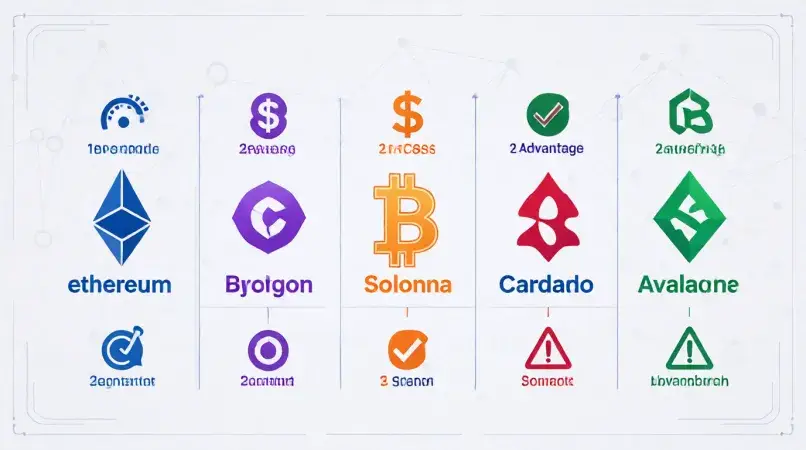
Comparing Major Smart Contract Platforms
| Platform | Transaction Speed | Cost | Main Advantage | Key Drawback |
|---|---|---|---|---|
| Ethereum | 15-30 TPS | High ($5-$50+) | Largest ecosystem | Expensive during congestion |
| Polygon | 7,000+ TPS | Very Low ($0.01) | Ethereum-compatible | Depends on Ethereum security |
| Solana | 65,000 TPS | Very Low ($0.00025) | Blazing fast | Occasional network outages |
| Cardano | 250 TPS | Low ($0.16) | Peer-reviewed development | Slower ecosystem growth |
| Avalanche | 4,500 TPS | Low ($0.02) | Sub-second finality | Smaller developer community |
Developers flock to cheaper alternatives. Polygon offers Ethereum compatibility at a fraction of the cost. Solana promises incredible speed but suffers occasional hiccups.
Choosing right cryptocurrency for smart contracts depends on your priorities. Need rock-solid reliability? Stick with Ethereum despite the costs. Want cheap experimentation? Try Polygon or Avalanche.
Understanding Utility Token Types
Utility tokens do more than pay transaction fees. They power entire ecosystems.
Governance tokens let holders vote on protocol changes. Own UNI? You help decide Uniswap’s future. That’s real ownership, not just speculation.
Yield farming tokens reward liquidity providers. Supply assets to a pool, earn tokens in return. Gaming tokens enable play-to-earn mechanics where players actually profit from gameplay.
Match token utility to your participation level. Don’t buy governance tokens if you never vote. Don’t chase yield farming tokens if you’re not providing liquidity.
Store of Value Cryptocurrencies for Long-Term Growth
Bitcoin remains digital gold. Its 21 million coin cap creates genuine scarcity.
Major institutions bet big on Bitcoin’s future. MicroStrategy holds billions in BTC. Tesla made headlines with its purchase. El Salvador made it legal tender.
Bitcoin as Digital Gold
Bitcoin’s track record speaks volumes. Multiple 80% crashes followed by new all-time highs. That volatility scares beginners but excites long-term believers.
Storing value in Bitcoin means accepting massive price swings. You need iron hands and a multi-year time horizon. Short-term traders get shaken out during crashes.
PedroVazPaulo business consultant services often help companies evaluate Bitcoin treasury strategies. It’s not for every business, but some thrive with crypto exposure.
Ethereum’s Dual Value Proposition
Ethereum offers something Bitcoin doesn’t: yield generation. The network’s proof-of-stake transition enables staking returns around 4-6% annually.
You’re not just holding value. You’re earning while you hold. Layer 2 solutions reduce transaction costs further, making Ethereum more practical for everyday use.
This positions ETH as both digital money and yield-bearing asset. That dual purpose attracts income-focused investors who want growth plus cash flow.
Alternative Store of Value Options
| Asset Type | Primary Benefit | Risk Level | Best For |
|---|---|---|---|
| Bitcoin | Proven scarcity | Medium-High | Conservative crypto holders |
| Ethereum | Yield + utility | Medium-High | Income + growth seekers |
| Privacy coins | Transaction anonymity | High | Privacy-focused users |
| DeFi tokens | Exposure to DeFi growth | Very High | Risk-tolerant believers |
Privacy coins like Monero offer transaction anonymity. DeFi tokens provide exposure to the rapidly growing decentralized finance sector. Each carries different risk-reward profiles.
Infrastructure tokens bet on blockchain adoption itself. As more applications launch, infrastructure value grows. It’s like investing in internet infrastructure during the dot-com boom.
DeFi Opportunities and Yield Generation
Decentralized finance exploded from zero to over $100 billion locked. That’s real money flowing through smart contracts.
Yield farming offers 5-20% annual returns. Traditional savings accounts don’t come close. But complexity runs deep here.
Conservative DeFi Entry Points
Start with stablecoin lending if you’re DeFi-curious. Platforms like Aave and Compound offer 2-8% yields on dollar-pegged assets.
Risk comes from smart contract bugs and regulatory changes, not price volatility. Your principal stays stable while earning interest. That’s accessible DeFi without the chaos.
PedroVazPaulo operations consulting helps businesses integrate DeFi into existing operations. The tech is complex but manageable with proper guidance.
Advanced Yield Strategies
More adventurous users chase higher yields through liquidity provision. You supply trading pairs to decentralized exchanges, earning fees on every swap.
Impermanent loss catches beginners off guard. When token prices diverge, you lose money compared to simply holding. Smart contract risks add another layer of danger.
Leveraged positions amplify both gains and losses. You can earn 50% APY or lose everything in a liquidation. Only risk what you can afford to lose completely.
Governance Token Potential
Governance tokens reward active DeFi participation. Uniswap’s UNI, Curve’s CRV, and Compound’s COMP appreciate as platforms grow.
But token values fluctuate wildly. Protocol usage, competitive dynamics, and market sentiment all impact prices. Success requires understanding both the platform and token economics.
Think of governance tokens as startup equity. Early believers get rewarded if the platform succeeds. But most startups fail, and most DeFi protocols will too.
Evaluating Crypto Projects Before Investing
Hype kills portfolios. Due diligence saves them.
Every promising crypto needs proper vetting. Social media buzz doesn’t equal solid fundamentals. Learn to separate signal from noise.
Key Research Areas
Check the team background first. Anonymous developers raise red flags. Experienced teams with proven track records inspire confidence.
Examine the technology carefully. Does the project solve a real problem? Or is it a solution searching for a problem? Many cryptos have impressive whitepapers but zero practical use.
Community engagement reveals project health. Active developers, regular updates, and engaged users signal vitality. Ghost town GitHub repositories and silent Telegram channels spell trouble.
Token economics matter enormously. How many tokens exist? What’s the inflation rate? Who holds the largest amounts? Poor tokenomics guarantee failure regardless of technology quality.
Red Flags to Avoid
| Warning Sign | What It Means | Action |
|---|---|---|
| Anonymous team | Higher risk of rug pull | Proceed with extreme caution |
| Unrealistic promises | Likely scam or naive team | Skip it entirely |
| No working product | Pure speculation | High risk, small allocation only |
| Concentrated ownership | Manipulation risk | Avoid unless there’s good reason |
| Copied codebase | No innovation | Why not use the original? |
Unrealistic promises scream scam. “Guaranteed 1000% returns!” means run away fast. Nothing’s guaranteed in crypto, especially not massive gains.
PedroVazPaulo marketing consulting teaches clients to spot genuine value versus clever marketing. The difference saves fortunes.
Understanding Market Dynamics
Liquidity determines exit ability. Thinly traded coins trap you when you need to sell. Major exchanges with high volume provide smooth exits.
Correlation patterns affect portfolio diversification. Many altcoins move with Bitcoin. If BTC crashes, your “diversified” portfolio might crash too.
Regulatory exposure varies by crypto type. Securities face stricter regulations than commodities. Privacy coins attract government scrutiny. Factor legal risks into your selection.
Building a Balanced Crypto Portfolio
Diversification isn’t buying 50 random coins. That’s over-diversification without strategy.
Smart portfolios balance different crypto types based on your goals and risk tolerance. Think core holdings plus speculative bets.
The Core-Satellite Approach
Core holdings provide stability and proven track records. Bitcoin and Ethereum typically form this foundation. They’ve survived multiple bear markets and command massive market caps.
Allocate 60-80% to core holdings if you’re conservative. These blue-chip cryptos won’t 100x, but they probably won’t zero either.
Satellite holdings add growth potential and specific use cases. Maybe you need payment coins for actual transactions. Perhaps you want DeFi exposure or crypto payment integration capabilities.
Limit satellites to 20-40% of your portfolio. These higher-risk bets provide upside without sinking your entire investment if they fail.
Rebalancing Strategies
Crypto prices move violently. Your carefully planned allocation gets wrecked in weeks.
Set rebalancing triggers based on percentage drift. If Bitcoin grows from 50% to 70% of your portfolio, sell some and buy underweighted assets.
This forces you to buy low and sell high automatically. You’re taking profits from winners and investing in temporarily depressed assets.
Time-based rebalancing works too. Review your portfolio quarterly or monthly. Adjust back to target allocations regardless of emotions or market conditions.
Position Sizing Based on Conviction
Higher conviction means larger positions. If you’ve done deep research on a project, bet bigger.
Lower conviction deserves smaller allocations. Interesting projects with unclear futures get 1-2% positions. You participate in the upside without catastrophic downside.
PedroVazPaulo coaching emphasizes conviction-weighted investing across all asset classes. Crypto is no different.
Security and Storage Considerations
Choosing right cryptocurrency means nothing if you lose it to hackers.

Security determines whether you keep your gains. Exchange hacks happen regularly. Personal mistakes cost millions.
Hot Wallets vs Cold Storage
Hot wallets stay connected to the internet. They’re convenient for frequent trading but vulnerable to attacks.
Use hot wallets only for amounts you’re actively trading. Think of them as your crypto checking account—keep minimal balances.
Cold storage keeps private keys completely offline. Hardware wallets like Ledger and Trezor provide excellent security for long-term holdings.
Transfer 80-90% of holdings to cold storage. You’re your own bank now. That means responsibility for security falls entirely on you.
Multi-Network Wallet Compatibility
Your crypto needs evolve over time. Wallets supporting multiple networks provide flexibility.
Ethereum, BNB Chain, Polygon, and other major ecosystems need seamless wallet integration. Switching between networks should be simple, not a technical nightmare.
Crypto casino responsible gambling platforms often require specific wallet types. Choose wallets that support your entire crypto journey.
Backup and Recovery Planning
Write down your seed phrase on paper. Store it in multiple secure locations.
Never store seed phrases digitally. Cloud storage gets hacked. Email accounts get compromised. Physical paper in a safe beats any digital solution.
Test recovery before loading funds. Restore your wallet from the seed phrase to verify it works. This dry run prevents panic during actual emergencies.
Tell trusted family members where to find your backup information. Crypto inheritance remains complicated. Proper planning ensures your assets don’t die with you.
Frequently Asked Questions
How Do I Start Choosing Right Cryptocurrency for My Portfolio?
Start by defining your investment goals clearly. Are you seeking payments, yield, or long-term growth? Match your needs to crypto categories first. Then research specific projects within those categories. Begin with established cryptocurrencies like Bitcoin or Ethereum before exploring alternatives. Never invest more than you can afford to lose completely.
What’s the Difference Between Payment Cryptos and Investment Cryptos?
Payment cryptos prioritize transaction speed and price stability. Stablecoins and fast-processing coins work best for purchases. Investment cryptos focus on value appreciation and utility. Bitcoin serves as digital gold, while Ethereum enables smart contracts. Choose based on whether you need to spend now or hold for growth.
How Many Cryptocurrencies Should I Own?
Most successful portfolios hold 5-10 different cryptocurrencies maximum. Concentrate on quality over quantity. Core holdings in Bitcoin and Ethereum provide stability. Add 3-5 satellite positions for specific use cases or growth potential. Over-diversification dilutes returns without reducing risk meaningfully in crypto markets.
Is Choosing Right Cryptocurrency Different for Beginners vs Experts?
Beginners should stick to established cryptocurrencies with proven track records. Start with Bitcoin and Ethereum before exploring alternatives. Experts can evaluate complex DeFi protocols and emerging projects effectively. Experience helps identify genuine innovation versus marketing hype. Everyone starts somewhere—prioritize learning before chasing high-risk opportunities.
What Red Flags Should I Watch When Choosing Cryptocurrencies?
Avoid projects with anonymous teams or unrealistic return promises. Check for working products, not just whitepapers. Examine token distribution—concentrated ownership enables manipulation. Verify community engagement and development activity. Skip projects copied from existing code without innovation. Trust your instincts when something feels wrong.
How Often Should I Review My Cryptocurrency Choices?
Review your portfolio quarterly at minimum. Crypto markets move fast, making monthly reviews better for active investors. Rebalance when allocations drift 10-15% from targets. Stay updated on project developments, competitive threats, and regulatory changes. Set price alerts for major movements. Consistent monitoring beats panic-driven decisions during volatility.
Conclusion
Choosing right cryptocurrency transforms from overwhelming to manageable with the right approach. Start by identifying your specific goals—payments, growth, or yield generation. Match those needs to appropriate crypto categories systematically.
Avoid chasing hype and social media trends. Focus on fundamentals, team quality, and real-world utility. Build a balanced portfolio with core holdings plus targeted satellite positions.
Security matters as much as selection. Protect your investments with cold storage and proper backup procedures. Remember, you’re your own bank in the crypto world.
Begin with small positions in established cryptocurrencies. Learn from experience before increasing your exposure. The crypto market rewards patient, informed decision-making over impulsive gambling.
Your next step? Define your primary crypto goal today. Write it down. Then research three cryptocurrencies that match that specific objective. Start small, stay informed, and adjust as you learn.